
Investors may wait for six months and then take another look at the stock.

The government has been stringent with pricing changes. Prices of 651 essential medicines came down from April 1, 2023 by 6.73 per cent with the government capping ceiling prices of these drugs.

'$125 million for the hull and the remaining of over $350 million for liability.'

Small scale pharmaceutical units in the country are facing an imminent closure owing to lack of business opportunities and hostile regulatory policies.

Tata Steel's UK operations, which have largely been a struggle since the acquisition, are expected to turn earnings before interest, tax, depreciation, and amortisation (Ebitda)-positive this financial year (2025-26/FY26) and possibly profitable by the next. Responding to shareholder queries at Tata Steel's annual general meeting, Tata group chairman N Chandrasekaran said, "We expect the UK to perform much better this year compared to last year - it will definitely be Ebitda-positive."

The Centre will sell tomatoes at Rs 80 per kg from Sunday, as against Rs 90 per kg earlier, to provide relief to people from high prices of the key kitchen item in retail markets.
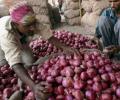
The government on Saturday imposed a 40 per cent duty on the export of onions to increase domestic availability amid signs of increasing prices. The export duty, which is the first time ever on onion, has been imposed as the retail sale price of the kitchen staple, according to government data, touched Rs 37/kg on Saturday in Delhi. The finance ministry through a Customs notification imposed a 40 per cent export duty on onions till December 31, 2023.
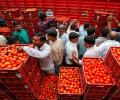
All India average retail tomato price, which has shot up by 63 per cent to Rs 67 per kg over the last year due to unseasonal rains, are likely to soften from December with the arrival of fresh crop from northern states, the government said on Friday. In the case of onions, retail prices have substantially subsided below to the level that prevailed in 2020 and also 2019, it said. "Tomato arrivals from north Indian states will start from the beginning of December itself, which will add to availability and lead to fall in prices.

Tomato prices in retail markets of metro cities have shot up to Rs 72 per kilogram on tight supply due to unseasonal rains in key producing states like Madhya Pradesh and Maharashtra.

Dwaipayan Bose examines the seven important factors that investors about exchange traded funds must know before they start investing/trading in them.
In a bid to further cool down edible oil prices and curb hoarding, the Centre on Friday extended stock limits on edible oils and oilseeds till June 30. Besides, the government has specified the stock limits that have to be imposed by states that have not implemented the earlier order on the limits. In October 2021, the ministry of consumer affairs had imposed stock limits till March 2022 and left the decision to states to decide on the stock limits based on available stock and consumption pattern.

The Union government has reduced prices of subsidised tomatoes to Rs 70 per kilogramme from Thursday from Rs 80 per kg now to provide relief to common man from high retail prices. The Centre is selling tomatoes to people at a subsidised rate of Rs 80 a kg in Delhi-NCR and some other key cities through the National Cooperative Consumers' Federation of India (NCCF) and the National Agricultural Cooperative Marketing Federation of India (NAFED). The all-India average retail prices of tomatoes is ruling at nearly 120 per kg, although the key kitchen item is selling as high as Rs 245 per kg at some places.

The rise in consumer price index (CPI) inflation could see the Reserve Bank of India (RBI) in an extended pause mode as regards interest rates, and in turn, keep the market rally in check, believe analysts. Signs of inflation cooling off in the US, however, is likely to provide some cushion as the expectations of a change in stance by the US Fed as regards interest rates is likely to aid sentiment. Back home, CPI inflation surged for the first time in five months to 4.81 per cent in June 2023, and was higher than the street's expectations of 4.58 per cent.

Adani Group on Friday raised Rs 4,850 crore from the sale of 13.5 per cent of its stake in Fortune oil maker Adani Wilmar as part of a strategy to exit non-core activities to focus on main infrastructure business. The conglomerate, which last month announced its exit from Adani Wilmar by selling the bulk of its stake to a joint venture partner, had on Thursday announced sale of 17.54 crore shares (13.50 per cent equity) in the company on January 10 (to non-retail investors) and on January 13 (to retail investors) at a floor or minimum price of Rs 275 apiece.

Farmer Ishwar Gaykar (36), from Pachghar village in Junnar tehsil of Pune district, had faced a difficult decision of dumping a large quantity of harvested tomatoes in May this year due to low prices.
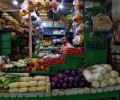
After unseasonal rains, supply disruptions and pandemic-induced woes pushed retail inflation well over the Reserve Bank's comfort zone in 2020, the scenario is likely to stay that way at least in the short term as economic recovery slowly gains foothold. For most part of this year, pricier food items pushed the retail inflation, based on Consumer Price Index (CPI), higher in the range of 6.58-7.61 per cent, except for March when the reading was 5.91 per cent. Experts believe retail inflation is likely to average around 6.3 per cent this fiscal and mostly will remain sticky going forward owing to pick-up in demand across sectors.

The report on the alleged liquor scam, a hot button issue in the run-up to the elections, claimed a loss of revenue to the tune of Rs 941.53 crore, saying timely permissions were not taken for opening the liquor vends in non-conforming municipal wards.

18% cent GST on iPhones continues to weigh heavily on the final cost to Indian consumers, limiting the impact of price cuts.
The country's largest private sector lender HDFC Bank on Saturday said it will grow its loan book slower than the industry in the current financial year (FY25). The move comes as the lender looks to bring down its elevated credit - deposit (CD) ratio to pre-merger levels. "We will bring down the CD ratio faster than what we had anticipated.
In a first, the Centre will start selling tomatoes at discounted rates in retail markets in the national capital and few other cities from Friday to provide relief to the consumers as the price of the kitchen staple is ruling high at over Rs 200 per kilogram in some parts of the country.

This move is expected to benefit 22 lakh cancer patients in the country.
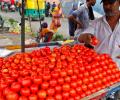
The Centre on Monday directed cooperatives NCCF and NAFED to sell tomatoes at a reduced rate of Rs 50 per kilogram from Tuesday in view of the decline in prices in the wholesale markets. Since July, both NCCF and NAFED have been selling tomatoes at a discounted rate on behalf of the consumer affairs ministry in Delhi-NCR, Uttar Pradesh, Rajasthan and Bihar to boost domestic availability and contain price rise. Initially, the ministry had asked the two cooperatives to sell tomatoes at a subsidised rate of Rs 90 per kg and later reduced the price to Rs 80 per kg. Further, the price was cut to Rs 70 per kg.

In 16 days, petrol price has been hiked by Rs 8.3 per litre and diesel by Rs 9.46 - a record increase in rates of the fuel in any fortnight since pricing was deregulated in April 2002.

"The price cap has been imposed taking into account the sharp increase in prices of raw materials used in making of face masks and hand santiser," Consumer Affairs Minister Ram Vilas Paswan said.

Gujarat Cooperative Milk Marketing Federation (GCMMF), which markets milk and other dairy products under the Amul brand, will hike milk prices by Rs 2 per litre across India from July 1 due to an increase in input costs. The increase of Rs 2 per litre translates into a four per cent hike in MRP (Maximum Retail Price) which is much lower than average food inflation, GCMMF said in a statement on Wednesday. "We have increased Amul milk prices by Rs 2 per litre across all markets.

Retail inflation moved up marginally to 10.36 per cent in May on account of increase in prices of vegetables, edible oils and milk.

Retail inflation declined marginally to 9.86 per cent in July due to lower prices of spices, cereals and its products although prices of vegetables remained high during the month.
The move brings an additional 15 per cent of the retail medicine market worth over Rs 4,000 crore (Rs 40 billion) under direct price control. All domestic companies, including drug majors like Ranbaxy, Cipla, Lupin and Dr Reddy's, have syrups and tonics in their product portfolio.

Cigarette pricing in India can go the liquor way as ITC, the undisputed leader in the sector, may consider state-specific pricing for its popular brands. This comes after the ad valorem duty imposed in the Union Budget, coupled with the varying value added tax (VAT) rates across states.

Markets regulator Securities and Exchange Board of India (Sebi's) measures to curb speculative activity in the Rs 450-trillion-a-day futures and options (F&O) market is not a case of "throwing the baby out with the bathwater," whole-time member (WTM) Ananth Narayan said on Friday. "As a regulator, we are conscious that we must not throw the baby out with the bathwater. "When it comes to frenzied trading in options nearing expiry, however, it is difficult to see any baby in this bathwater," he said while delivering his address at the 21st FICCI Annual Capital Markets Conference.
Jay Retailing and Merchandising Pvt Ltd, promoters of The Loot chain of retail stores in the country, is planning to go public in 2009.

A December 28 board meeting of the Securities and Exchange Board of India (Sebi) may tighten norms for initial public offerings (IPOs). The board may look to prescribe a minimum 5 per cent gap in IPO price bands, extend the lock-in period for anchor investors to 90 days and cap the amount a majority investor can sell through offer for sale. The regulator is looking at whether there can be a preferred allocation for anchor investors who opt for a longer lock-in period, said a person familiar with the matter.

According to highly placed sources in NPPA, the reduction in prices following the latest exercise will range between six and 53 per cent.
At an average national price of Rs 90 a kg in the retail market, it shows a jump by 20% in the last two months.

The intention of the government is to cap prices of drugs that are essential and which the public widely uses.

The idea is to keep a close watch on real-time price movements, the maximum retail price of medicines and their availability.
Chemicals and Fertiliser Minister Ram Vilas Paswan said on Thursday that the Union government will introduce maximum retail price-based pricing regime for medicines
State-owned Indian Oil Corp wants diesel prices to be freed from government control before its twin follow-on public offersto raise maximum funds, company Chairman B M Bansal said on Monday.
The central government is likely to prescribe a special rate of abatement on the retail prices of drugs for calculation of excise duty.
